| This is the story of John
Preece, a Shropshire railway worker in the 19th century.
He showed great bravery, but suffered great injury. This is reproduced here in its entirety (with permission) from the original publication on the excellent website Railway Work, Life and Death [ https://www.railwayaccidents.port.ac.uk/ ] The author of the original article was Steve Jackson, who maintains a One Place Study of his own, which can be found at https://www.one-place-studies.org/europe/england/shropshire/waters-upton/ |
|
John
Preece, his bravery, and his terrible injuries We’re delighted to
have received this timely guest post from long-time
project friend and support Steve Jackson. It’s
timely because, as Steve notes, it meshes nicely
with this month’s focus on tragedies centered on a
particular place. One of the virtues of our project
is that it will increasingly allow us to take a
place-based approach, amongst others, to railway
staff accidents. Here Steve extends our reach back
into the 1860s, linking a variety of sources to
uncover a fascinating story. It’s been a busy
time for Steve in relation to our project, too, as
he spent some time digging away to uncover further
details about last week’s blog post,
helping us and (more importantly) the grandson of
the injured man at the heart of the post. This is a
brilliant testament to the benefits of collaboration
– it makes our research better. Thanks Steve! ‘One-Place Tragedies’
is the Society for One-Place Studies’ blogging prompt for
February 2021 (social media hashtag
#OnePlaceTragedies). We’ve had many fascinating and
suitably tragic tales contributed already – you will
not be surprised to learn that there’s no shortage of
material when it comes to unfortunate deaths and
injuries in the places we study. All this grimness can
be a bit overwhelming however (particularly in the
midst of a global pandemic). So, I came up with a
bonus theme to be used as an alternative or as an
addition: One-Place Joys. In my efforts to find
a joyful story to share from my own one-place study of
Waters Upton in Shropshire, I found one tinged with
tragedy – Waters Upton’s first amateur
entertainments, which I am currently writing and
posting in several instalments. These entertainments –
evenings of songs, music and readings held in February
1867 – were “for the benefit of John Preece”. It did
not take long for me to find that John was a railway
employee who, in a selfless attempt to save a life,
suffered horrendous injuries which led to multiple
amputations. Although John had no connections with
Waters Upton, I wanted to research and tell his story.
Where better to do so than here on the ‘Railway Work,
Life and Death’ blog? The accident John’s accident was
one of two involving railway workers which were
reported in the Shropshire papers of Saturday 29
December 1866. Both had taken place on the preceding
Wednesday, the 26th. The other victim was David Jones,
a wagon inspector, who “was engaged coupling some
carriages to an engine, when he was caught between the
buffers, and sustained severe internal injuries.”
According to the Wellington Journal’s
report, he was not expected to survive. With regard to
John, the Journal reported: On
Wednesday, a man named Thomas [sic] Preece was
seriously injured on the Railway, between this town
and Oakengates. The way in which the accident
occurred is thus described by the poor fellow: he
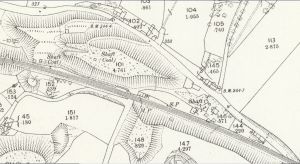
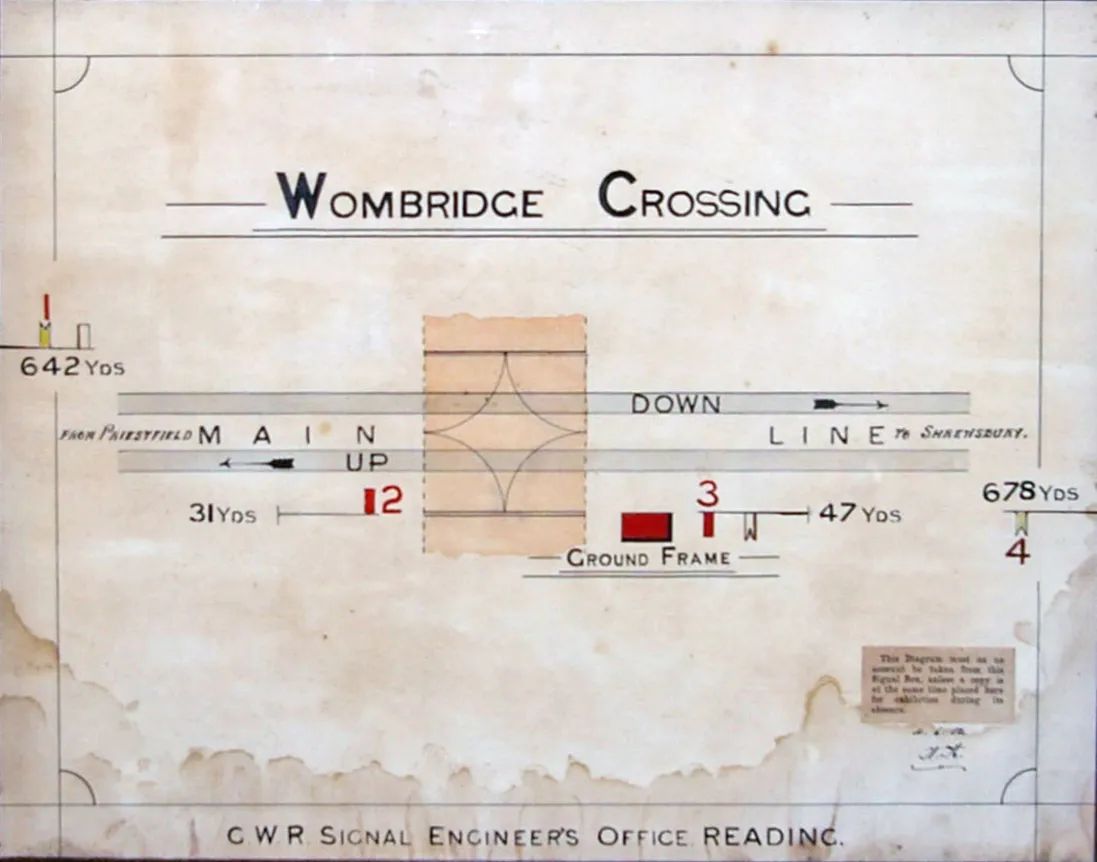
states that whilst engaged at his post, at Wombridge
crossing, he ran across the line to rescue a child
that had strayed there, and at the same moment an
approaching train knocked him down. He lies in a
most precarious state at the Shrewsbury Infirmary.
Two weeks later on 12
January 1867, the same newspaper updated its readers
on “The Pitiable Case.” Mr Wood, an honorary surgeon
at the infirmary in Shrewsbury, acknowledged “on
behalf of his poor patient who lost both his hands and
one foot in saving a child crossing the railway at
Wombridge, subscriptions amounting to £16 3s., and to
say that the man is now recovering.” Additional
subscriptions were solicited and would be received by
Mr Wood and his fellow surgeons at the infirmary.
Additional appeals
for subscriptions followed, with Eddowes’s
Shrewsbury Journal on 16 January
publicising an effort led by Colonel W Kenyon Slaney.
The notice of this noted, with regard to John Preece: He is now lying in
the Infirmary, with his left arm amputated at the
shoulder, and also his right hand and his right
foot. He has a wife and two children. Believing that
the public will wish to alleviate the suffering
incurred in this act of courage and humanity, we
will undertake that any subscription shall employed
in the most useful manner for the man and his
family. The same notice
announced that the “Eleventh of the Penny Readings and
Musical Selections” to be given at the Music Hall in
Shrewsbury would be for John Preece’s benefit. Other
fund-raising initiatives Additional subscriptions were
soon set up at Shifnal, Wellington, and of course
Wombridge (Wellington Journal, 26 January
1867). The latter parish was where John Preece not
only worked but also lived, and the vicar, James
Russell, naturally took up the case of his
“unfortunate parishioner”. In a letter published in
the Wellington Journal of 2 February
1867 the Rev Russell noted that a subscription had
also been set up in Birmingham, and said “I was myself
present some two or three minutes after the accident,
witnessed the sad scene at his house, and saw him put
in the train on his way to the Infirmary, where I have
since visited him.” The same day’s
edition of the Bridgnorth Journal had
this to say about John’s situation: To the
benevolent.—Many of our readers doubtless have had
their attention called by the public papers to the
lamentable accident to John Preece, the railway
porter, stationed at Wombridge, when successfully
attempting to save the life of a child, who had
incautiously wandered on to the line at that
station. The injuries inflicted on Preece were so
extensive that since his removal to the infirmary at
Shrewsbury he has suffered amputation of his left
arm, immediately below the shoulder, his right hand
and right foot, but we are happy to my the
operations have been most successfully performed and
that the sufferer is progressing very
satisfactorily. Preece however, has thus been
reduced to further helplessness, and a few friends
have formed the laudable intention of raising a
small fund by which he and his wife may be placed in
a business by which they may realize a competency
for the future. John Preece and his wife are natives
of this locality, both having been born at Shirlet,
where they have ever been respected by all their
acquaintances, and for a considerable period Preece
occupied the situation of under gardener to a lady
in this neighbourhood, to whom be afforded every
satisfaction. The Mayor, with his usual kindness,
has signified his willingness to receive any
contribution that may be kindly subscribed. Interest in John’s
plight and support for the subscriptions set up in his
name grew over the ensuing weeks. The Shrewsbury
Chronicle of 8 February 1867 reported on a
well-attended entertainment “given at the Wrekin
Assembly Rooms,” and noted that John was an employee
of the Great Western Railway Company. Two weeks later
that paper reprinted a letter which had appeared
in The Times, in which it was stated that:
“About £130 has been subscribed in Shrewsbury and the
neighbourhood, and it is calculated that with a little
more than £300 a small annuity might be purchased for
him.” The letter also said that John was aged 32, and
that his accident had taken place at the level
crossing at Wombridge. The entertainments at
Waters Upton took place about this time, and receipt
of the money raised was acknowledged in the Wellington
Journal on 2 March in a short report on
“The Case of John Preece, Gatekeeper.” Another update
in that paper three weeks later on the amount
collected in Wombridge is the last news item I can
find on the subject – not knowing the final grand
total raised for John is very frustrating! Who was John
Preece? John was at first a
little tricky to track down in the usual genealogical
sources. The fact that he was referred to as Thomas in
most of the earlier reports on his accident added an
element of uncertainty. His reported age of 32 gives
an approximate birth year of 1835, but was his age
reported accurately? Another issue was
John’s birth place. As you have seen, the Bridgnorth
Journal reported that both John and his
wife were born at Shirlet (Shirlett), which lies in
the Shropshire parish of Barrow. My searches revealed
several John and Thomas Preeces of around the right
age, but not one born at Shirlett or Barrow. So I changed tactics
and checked the Wombridge baptisms close to the date
of John’s accident. This revealed the baptism of Lucy,
daughter John and Martha Preece of that parish, on 22
July 1866. Crucially, in that record John’s occupation
was given as “Railway Porter”. This one record
provided the key which unlocked the door to many
others and allowed me to find out more about John
Preece. John, son of James
and Susannah Preese (as the name was written in the
register) was baptised at Broseley on 26 April 1835.
John’s father James was a labourer, an occupation he
was still engaged in when the census was taken
in 1841. At that time the ‘Priece’
family was living at Woodhouse in Wombridge parish.
James was still a labourer – of the agricultural
variety – in 1851, as was 16-year-old John.
The family by then was residing ‘out in the sticks’ at
Willey, adjacent to the parish of Barrow, southwest of
Broseley. In 1860 John married
Martha Downes. The Shropshire BMD website shows that
their wedding was of the “Register Office or Registrar
Attended” variety, in Madeley Registration District.
The couple took up residence in Broseley, where they
were enumerated (along with Martha’s younger sister
Ann Downes) at Delph Side on the 1861 census. The
birth of the couple’s first child, a son named George,
was registered at Madeley in the last quarter of that
year; I have not found a record of his baptism online. After George came
James Preece, who was baptised at Wellington All
Saints on 20 September 1863 (although the birth was
not registered until the following quarter). The baptism register shows that
the Preece family was then residing at Pump Street in
Wellington – and that John Preece was working as a
Railway Porter. Sadly, baby James died the following
year and was buried at Wellington All Saints on 10 Apr
1864, by which time the Preeces had moved to Lady
Croft Terrace. As we have seen,
daughter Lucy was added to the family in 1866, so
reports relating to John Preece after his accident,
stating that he had a wife and two children, were
correct. What happened to
John and his family? I don’t know about
you, but after reading about John Preece’s terrible
injuries I wanted to know how he and his family
managed following his discharge from Shrewsbury’s
infirmary. While I have found no accounts of his life
as a multiple amputee, I have found John in the usual
records post-accident, and references to him in
newspapers, all of which indicate that he coped
remarkably well. It appears that John
and his family had moved to Wellington by 1869. In a
“Notice of sale by auction of various pieces of land”
in that parish, published in the Wellington
Journal of 23 October 1869, Lot 1 was “A
Valuable Piece of BUILDING LAND, as now staked out,
having a frontage to the south side of the road
leading to Haygate of 67 feet, now in the occupation
of John Preece, and containing 454 square yards or
thereabout.” Lot 2 was “Four well-built Brick and Tile
MESSUAGES or DWELLING-HOUSES, with the Gardens and
Appurtenances, as now staked out, situate adjoining
the last lot, in the occupations of John Preece,
William Jones, James Bizzell, and Richard Brazier
[…].” How can I be sure
that the John Preece referred to in the sale notice
was our man? Well, on 29 May 1870, at Wellington All
Saints church, John, son of John and Martha Preece of
“Hay Gate Road” was baptised. John senior was
described as a “Signal Man” – his employer had found a
way to retain his services! Not for long however. John
and Martha Preece, now with three children were still
living in Haygate Road when the 1871 census was taken, but
John’s occupation was now recorded as “Gardener”.
Incidentally, the next three households on that census
included Sarah Jones, a “Railway porter’s Widow”
(presumably her late husband was the William Jones
named in the sale notice detailed above), with lodger
William Morris (Railway porter); James Bizzell
(Railway Fireman – and named in the aforementioned
sale notice); and Joseph Horley (Railway Shunter). Another entry in the
Wellington All Saints’ baptism register, for Frank
Preece on 26 January 1873, shows that the family
remained in Haygate Road for at least another couple
of years. It also shows that John Preece had changed
his occupation and was now a greengrocer. He was still
pursuing that business when daughter Edith was
baptised on 17 February 1878, but by this time the
Preeces had moved to Wrekin Road in Wellington, where
they would remain for many years. I am not sure whether
the next entry in the All Saints baptism register for
a child of John and Martha Preece is evidence of yet
another occupation, or of an error made by the clerk
when completing it! Three baptisms took place at the
church on 11 April 1880, and all three of the fathers
of the children concerned were described as
Innkeepers. The third entry was for Harry Preece, who
was a leap year baby born on 29 February that year.
Was John Preece trying his (prosthetic) hand at
another way of earning a living? If he was, it was a
relatively brief experiment. On the 1881 census John Preece
gave his occupation as Market Gardener. Living with
him was wife Martha, and the couple’s children Lucy
(14), John junior (10), Edith (3) and Harry (1). There
was also a lodger, 25-year-old Bernard Starkey, a
native of Congerstone in Leicestershire. Bernard was
working as a Railway Guard, and I can’t help wondering
whether his employer – John Preece’s former employer –
had put these two in touch so that John could boost
his income. The last of John and
Martha’s children was Frederick Preece, born on 24 May
1882 and baptised at Wellington All Saints on 9 July
1882. Again, John Preece was recorded as a gardener.
How successful was he in this occupation? Given that
he had lost one foot and, even more crucially, his
left arm and his right hand, I can only imagine that
gardening would have been a struggle even if John was
equipped with the best prosthetics the late 1800s had
to offer. Whatever the difficulties, John overcame
them and produced prize-winning vegetables, fruits and
flowers. The earliest evidence
I have found for John’s amazing achievements as a
gardener comes from the Wellington Journal of
12 August 1882. A report on the Wellington
Horticultural Society’s shows that in the cottage
garden category, “John Preece, of Wrekin Road,
Wellington, was awarded first prize for a garden well
stocked with produce, especially winter stuff.” In
addition, John won prizes for Three Sticks of Celery
(1st place), a Dish of French Beans (30 pods) (2nd),
and a Collection of Pot Herbs (2nd). Further recognition
followed in the years that followed, the full extent
of which I will probably never discover due to OCR
errors in the machine-reading of the old newspaper
page scans. Here’s what I have found. All of the
following are taken from reports relating to
competitions open to cottagers, and to John or J
Preece of Wrekin Road or of Wellington:
Although we can see
from the above that John Preece continued competing in
the annual shows at Shrewsbury into the early 1890s,
when the 1891 census was taken no occupation was
recorded for him. Was that an error, or did John
retire from gardening as paid employment in the 1880s
and continue just for pleasure for a while? Either
way, the family was not without income as Martha
Preece was working as a Laundress. The household – its
address given as 57 Wrekin Road – also had a boarder,
David Breeze aged 26, who was a Railway Train
Examiner. Bernard Starkey had not disappeared from the
scene, although he was enumerated as a visitor (and a
Railway Goods Guard) rather than as a lodger in 1891. Bernard was still
with the family (or back with them) as a boarder in
1901, by which time the Preeces had moved to 6
Cemetery Road in Wellington. John Preece’s occupation
was recorded as “Retired Railway G”, which to me
indicates that although his injuries had forced him to
give up his work for the Great Western, he still
regarded himself as a railwayman first and foremost.
Does it also indicate that he was receiving a GWR
pension? There was only one of
John and Martha’s children left at home in 1901,
21-year-old Harry. In addition, granddaughter Beatrice
P Shaw, aged 11 and born in Newport, Monmouthshire,
was staying with the family. How marvellous to see
that John, who could so easily have been killed back
in 1866, lived to become a grandfather! On a sadder
note, John also survived long enough to outlive his
wife Martha, whose death at the age of 67 was
registered at Wellington in the first quarter of 1907. The census of 1911
was the last one on which John Preece was recorded. A
75-year-old widower and Retired Railway Man, he was
living at 50 Urban Terrace in Wellington with his
daughter and son-in-law Lucy and John Shaw, and their
children. Those children included Beatrice Preece Shaw
and Albert Downes Shaw – what a nice touch to see that
they were given their grandparents’ surnames as
‘middle names’. I hope that John continued to live
with them, surrounded by family, well cared for and
happy, until his death at the age of 81 in 1916. And so this story,
which started with John Preece’s name being mentioned
in a newspaper report of an event in my one-place
study, concludes. There is much that I find
fascinating, not to mention moving, within it. Here’s
something else: Anyone researching John Preece using
census and vital records alone would have no idea
about the bravery John displayed, or of the heavy
price had to pay for his life-saving actions in
December 1866. |